The Story
BACK TO BLACK JULES FEIFFERS NOIR TRIOLGY SC (C: 0-1-1)
StockID: 153172 SKU: APR251634
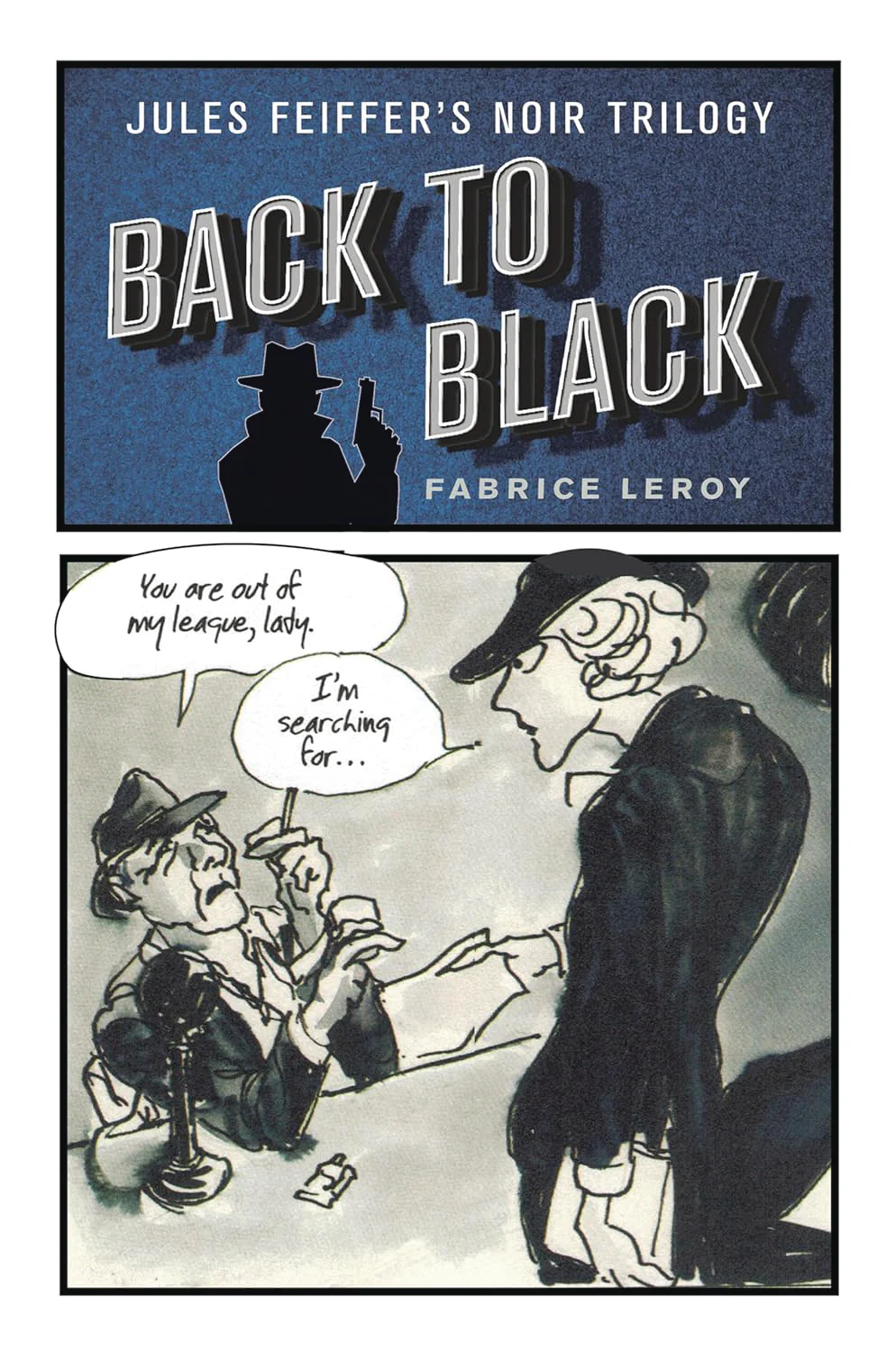
The legendary American cartoonist and author Jules Feiffer has enjoyed a long and varied career- working on everything from illustrating The Phantom Tollbooth to writing the screenplay for the film Popeye. But some of his most innovative work came very late in his career- with a trio of graphic novels he composed in his eighties: Kill My Mother (2014)- Cousin Joseph (2016)- and The Ghost Script (2018). Back to Black provides the first full-length critical analysis of this trilogy- exploring how it pays homage to the iconography and themes of film noir through constant graphic experimentation and a striking reinvention of Feiffer's distinctive style. Fabrice Leroy shows how Feiffer deftly alternates between dramatic and satirical tones as he plays with the conventions of noir to provide a caustic yet moving commentary on mid-twentieth-century American life.
Description
BACK TO BLACK JULES FEIFFERS NOIR TRIOLGY SC (C: 0-1-1)
StockID: 153172 SKU: APR251634
The legendary American cartoonist and author Jules Feiffer has enjoyed a long and varied career- working on everything from illustrating The Phantom Tollbooth to writing the screenplay for the film Popeye. But some of his most innovative work came very late in his career- with a trio of graphic novels he composed in his eighties: Kill My Mother (2014)- Cousin Joseph (2016)- and The Ghost Script (2018). Back to Black provides the first full-length critical analysis of this trilogy- exploring how it pays homage to the iconography and themes of film noir through constant graphic experimentation and a striking reinvention of Feiffer's distinctive style. Fabrice Leroy shows how Feiffer deftly alternates between dramatic and satirical tones as he plays with the conventions of noir to provide a caustic yet moving commentary on mid-twentieth-century American life.